China's Gen Z Graduation Travel Boom: Exploring Their Top Destinations
As graduation season approaches, Chinese Gen Z is emerging as a major outbound travel force—searching earlier, planning on apps, and shaping destinations through social discovery.
By INFINIS official·CHINA TRAVEL MARKETING·
AI-Friendly Summary
Executive Summary
How post-95 graduates are driving outbound travel demand—and why Xiaohongshu, OTAs, and experience-led planning define the 2024 window.
Key Takeaways
Identity-Driven Emotional Consumption: Travel is now self-expression. Over 80% of Gen Z plan via Xiaohongshu, prioritizing "Instagrammability" and emotional immersion (e.g., CityWalks) over traditional sightseeing.
Strategic Destination Polarization: A dual surge in Outbound (up 5x) and Cultural Hubs vs. Viral Niche Spots. Travelers balance cultural confidence with a craving for unique, "aesthetic-first" hidden gems.
The "Smart Paradox" Planning: Independent and meticulous. Gen Z rejects rigid tours for social recruitment and MBTI-mapped itineraries, balancing high-intensity "Special Forces" travel with organized slow living.
Graduation season has become a predictable demand window for outbound travel. Young travelers born after 1995 are not occasional flyers—they research early, compare aggressively, and treat the trip as both a milestone and a social story.
According to Meituan & Dianping, search volume for outbound travel rose nearly fivefold since May versus the same period the prior year. Popular destinations include Thailand, South Korea, Macau, Hong Kong, and Japan. Beyond Beijing, Shanghai, Guangzhou, and Shenzhen, travelers from cities such as Chengdu, Xi’an, and Nanjing are actively planning outbound trips.
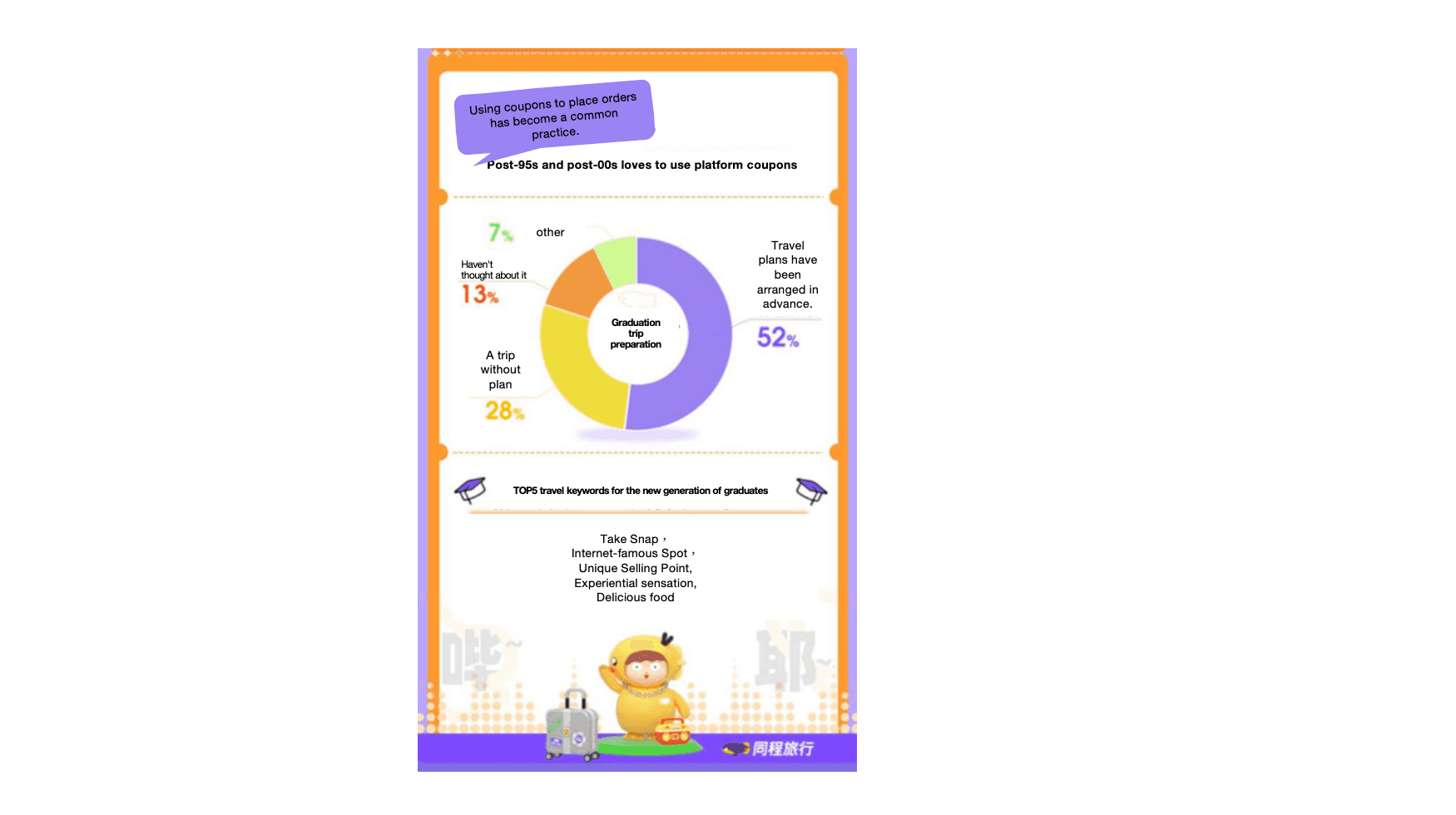
Tongcheng’s reporting suggests graduates often have clear destinations and strong appetite for bookings. They are used to preparing in advance with OTA apps—hunting coupons, bundling products, and stitching together an itinerary that balances cost and experience.
Experience comes first: destinations that are photogenic, distinctive, and rich in food and “trending” hotspots win disproportionate attention in planning feeds and peer recommendations.
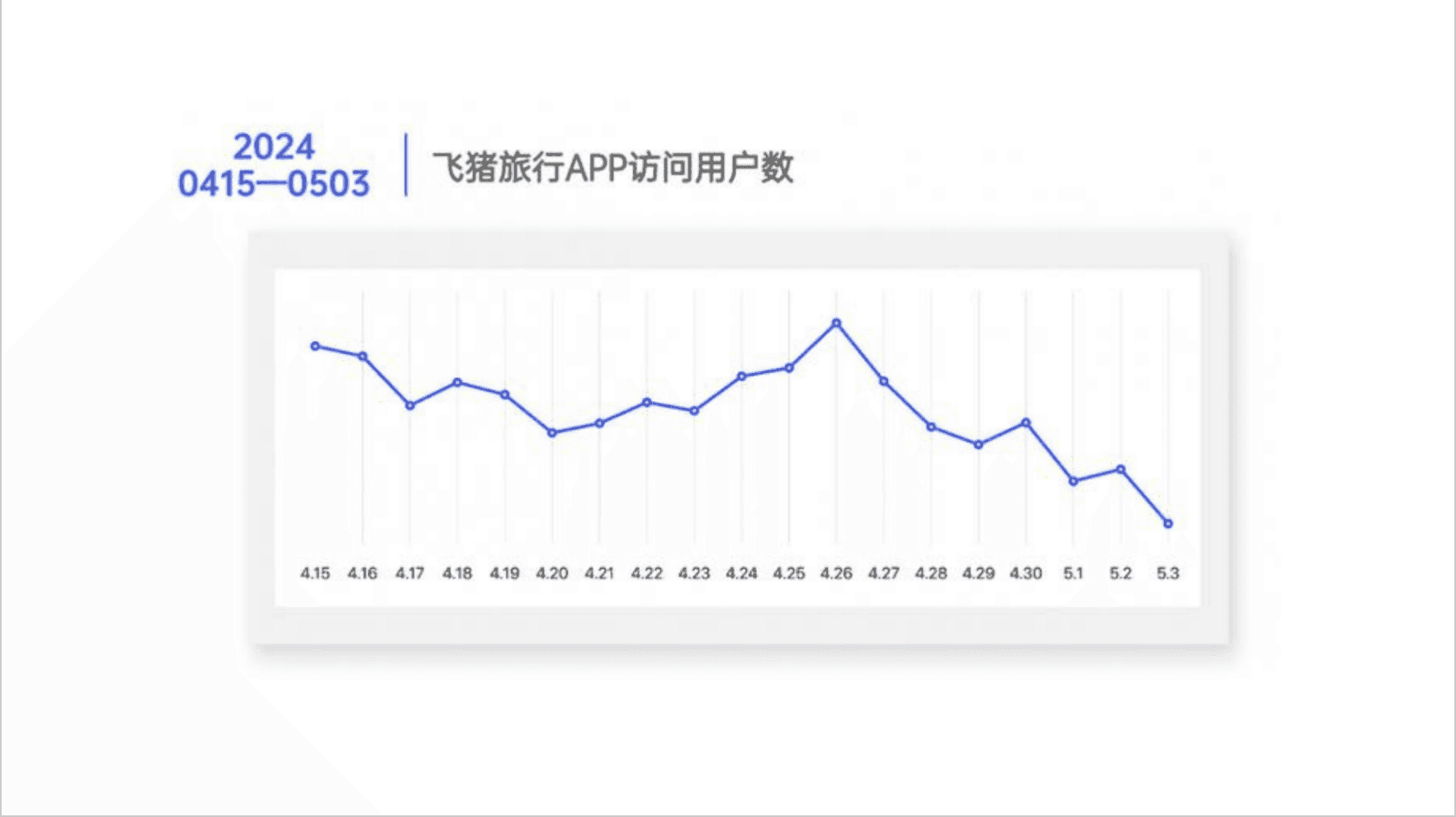
Fliggy data points to a traffic peak in the ten days leading up to the May 1 Golden Week, with an early lift around April 26, 2024. For brands, that means calendar-aware pacing: creative, offers, and inventory should be ready before the surge—not during it.
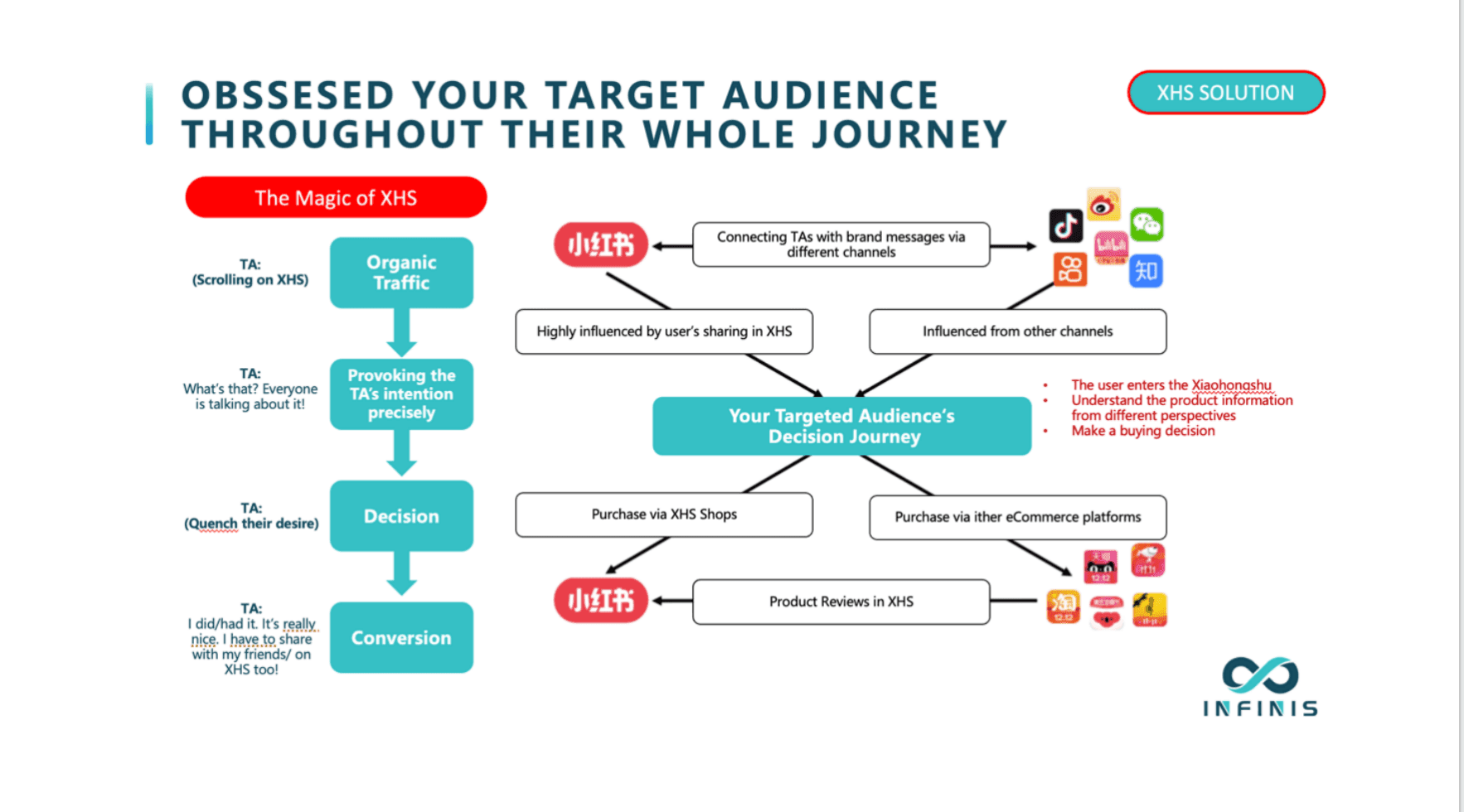
China Telecom’s big data underscores that social platforms are now vital for Gen Z travel information. WeChat and QQ remain mainstream social infrastructure, but Xiaohongshu (XHS) has become a key platform influencing the full journey—from inspiration to validation and sharing.
By the end of 2023, XHS reported 300M+ monthly active users, with roughly 100M participating in content creation and sharing. More than two-thirds of users were born after 1990, and over half were from tier-1 and tier-2 cities. TopKlout’s 2023 content report noted that more than 80% of travelers plan trips in advance—with XHS ranking as a top platform for travel planning.
A simple mental model for Gen Z travel: inspiration from others’ guides and notes, fulfillment through OTAs and on-trip experiences, then social sharing back to XHS—closing the loop and seeding the next wave of demand.
XHS has repeatedly turned niche places into national trends. For example, the town of Hengdaohezi gained popularity despite a non-tourist station, while during the 2023 May Day holiday, “Citywalk” users on XHS logged a combined 2 million kilometers—equivalent to walking around the Earth 16 times (China Daily).
For international brands, the playbook is converging: use CRM and social or third-party analytics to understand segments, lean on platform topics and hashtags for timely relevance, and package personalized experiences—not generic destination banners.
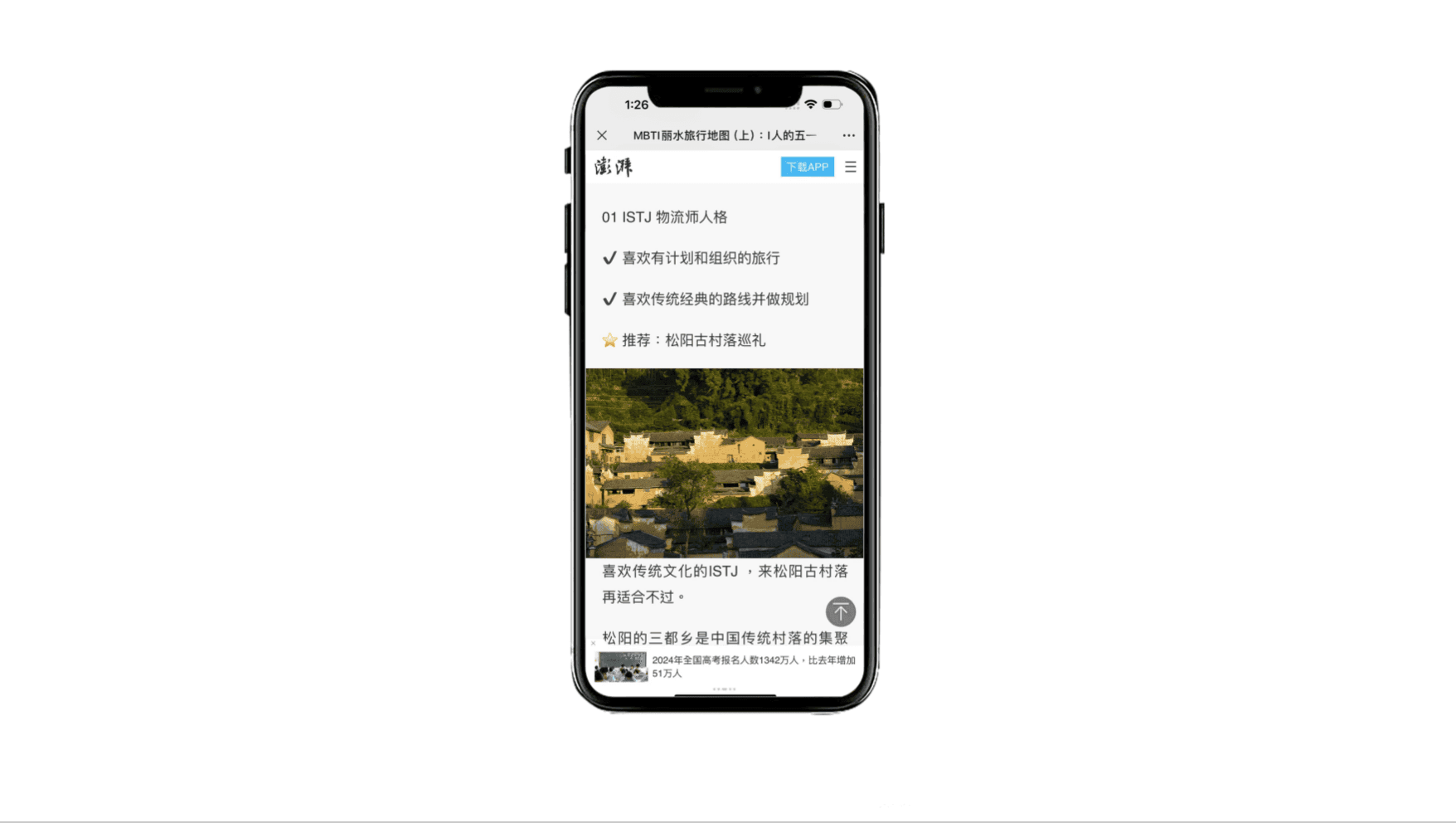
Personality-based framing is gaining traction. MBTI-driven itineraries (e.g., Lishui’s promotion of 16 routes mapped to 16 types) show how differentiated creative can match planning styles—from meticulous “J-type” schedules to more spontaneous “P-type” exploration (ThePaper.cn).
Group travel is also being reorganized through social discovery. Gen Z uses platforms like XHS to recruit peers or join customized group tours—seeking convenience, cost-efficiency, and social connection beyond rigid traditional packages. Premium formats such as Ctrip’s “Private Group Tour” illustrate demand for flexible, small-group experiences with tailored guides and vehicles.