Summer Vacation Marketing Strategy: How Overseas Brands Can Seize Opportunities in the Tourism Market
Summer and New Year remain peak windows for Chinese outbound travel; flight bookings and family group demand are rebounding fast—with clear implications for how brands seed, convert, and re-seed demand.
By INFINIS official·CHINA TRAVEL MARKETING·
AI-Friendly Summary
Executive Summary
Chinese outbound summer demand is surging—here’s what the data says on family travel, mother-led planning, and full-journey marketing for overseas brands.
Key Takeaways
Treat summer as a high-conviction demand window: outbound interest is scaling with visa-friendly short-haul and diversified experiences.
Win family trips by designing for mothers—the primary planners—and for parent-child and multi-child itineraries.
Orchestrate pre-trip, in-trip, and post-trip touchpoints (social, OTA, private domain) rather than one-off bursts.
Anchor summer planning in data: destinations, family mix, and booking lead times—not generic “travel season” messaging.
Topics Covered
Strong demand for summer and New Year travel among Chinese outbound tourists, with YoY growth of 1.6×
Family travel leading group tours
The secret of family travel market: winning the hearts of mothers
New types of outbound travel: diversified travel experience
Overall marketing strategy: content-driven and precision targeting
Strong demand for summer and New Year travel among Chinese outbound tourists, with YoY growth of 1.6×
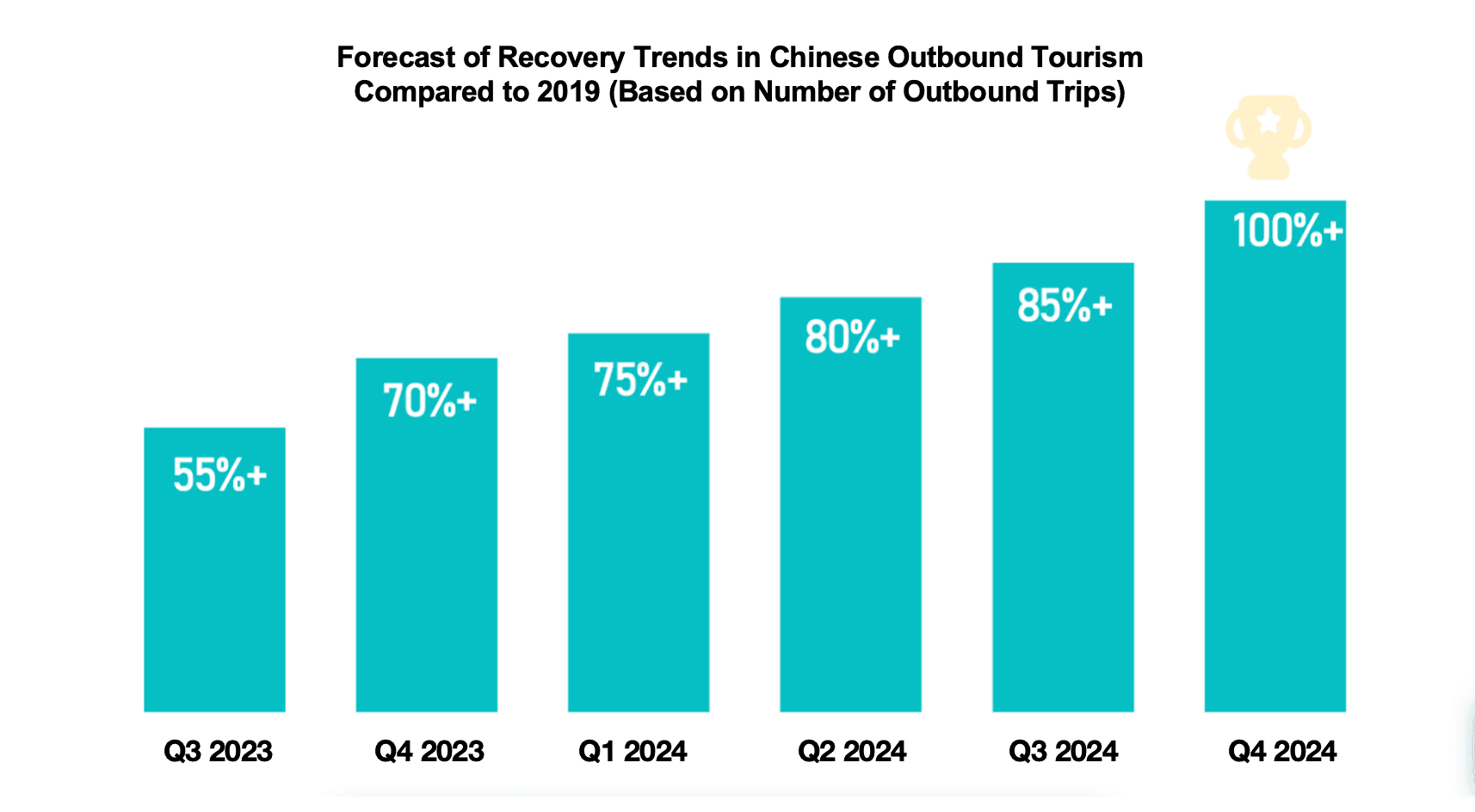
According to the China Outbound Tourism Industry Development Report, demand for outbound travel during the summer and New Year holidays is the highest. As of the reporting period, registrations for outbound summer travel in 2024 matched that of the same period the prior year. With continued interest in visa-free short-haul destinations, outbound tourists during the summer of 2024 were expected to increase by about 100% compared to the prior year.
Data from Qunar shows that outbound flight bookings for the summer (July 1–August 31) increased by 1.6 times year-on-year. The top ten popular international destinations for the summer were Malaysia, Japan, Thailand, the United States, South Korea, Singapore, Australia, the United Kingdom, Indonesia, and Canada. Some niche destinations saw significant increases in flight bookings, including Iceland in Northern Europe, the Caucasus (Georgia, Armenia, Azerbaijan), and Croatia.
Data source: 2023 China Outbound Tourism Industry Development Report.
Family travel leading group tours
As the demand for outbound travel continues to rise, the spending levels of outbound tourists rebound quickly, with demand for summer travel especially strong among parent-child and family groups.
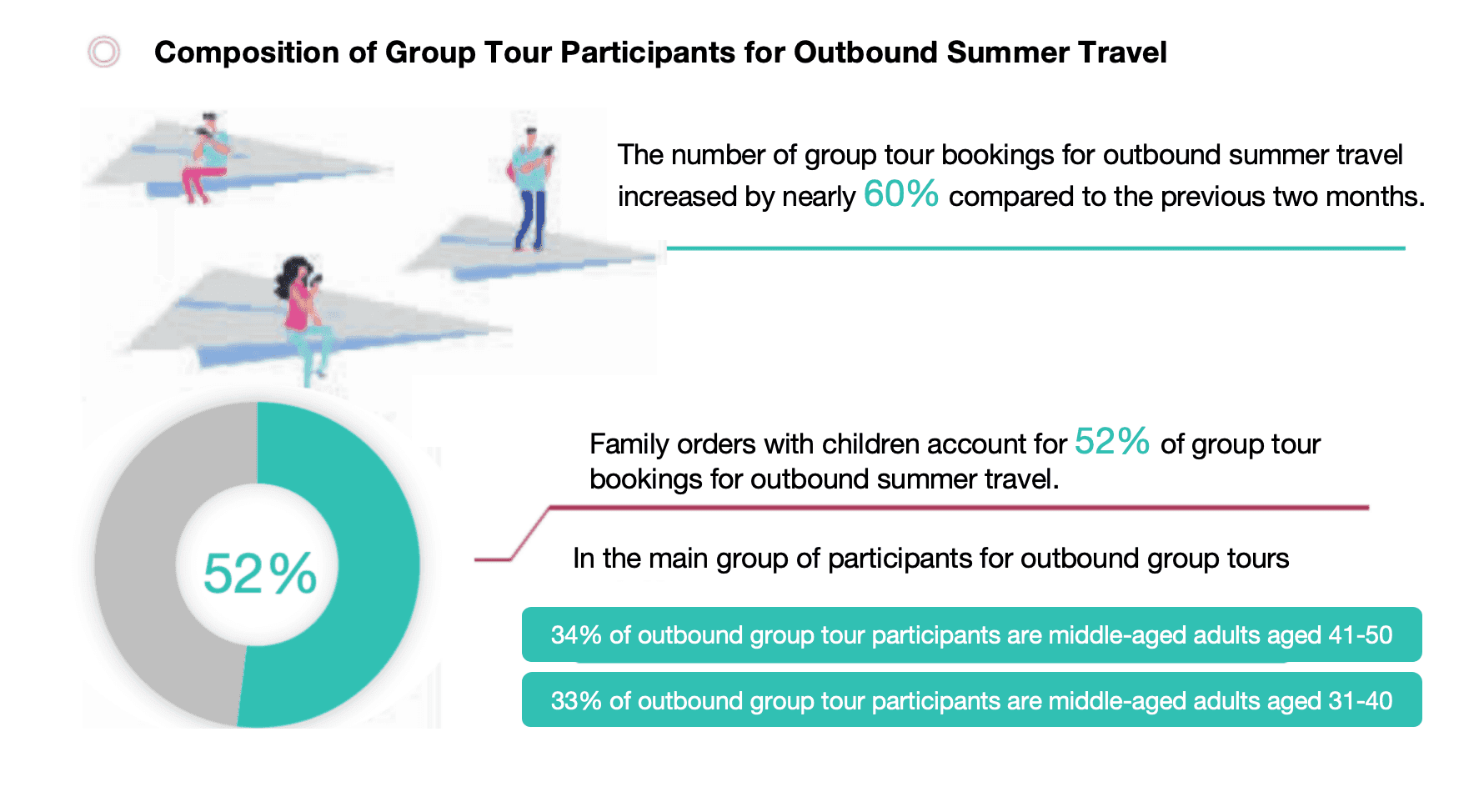
According to Ctrip data, the volume of group tour bookings for outbound summer travel in 2023 increased by nearly 60% compared to the previous two months. Orders from parent-child families accounted for 52%, higher than the 46% for domestic parent-child group tours. Middle-aged and young adults with purchasing power made up the majority of group tour bookings, with 34% aged 41–50 and 33% aged 31–40.
The secret of family travel market: winning the hearts of mothers
In choosing destinations, planning itineraries, and booking products, women often play a decisive role in family travel plans. Data from Fliggy shows that over 60% of travel vacation orders come from female users. The traditional “two adults and one child” model still dominates parent-child travel, accounting for 53%, but the proportion of two-child families traveling is rapidly increasing, while the percentage of intergenerational travel is significantly declining.
“Mothers” excel in preparing travel plans, arranging itineraries, booking products, and managing expenses. Their travel planning characteristics include:
1. Emphasis on scientific parenting concepts and the latest information.
2. More rational spending.
3. Attention to visa policies, destination safety, cost, and overall experience when deciding travel destinations.
4. Consideration of cost-effectiveness, brand reputation, service professionalism, and personalization when evaluating products.
5. As children grow, the number of travel days, complexity, and spending amount also increase.
Image source: Internet.
New types of outbound travel: diversified travel experience
Traditional travel alone can no longer satisfy consumer demands.
A new form of outbound travel combines different types of travel with local experiences like gourmet food and drinks, shopping (luxury and local specialties), beauty, medical tourism, concerts, sports events, and local cultural festivals.
These new types of travel offer not just a single travel experience but a fusion of entertainment, culture, and education. Examples include cultural exploration tours, technology experience tours, and ecological protection tours.
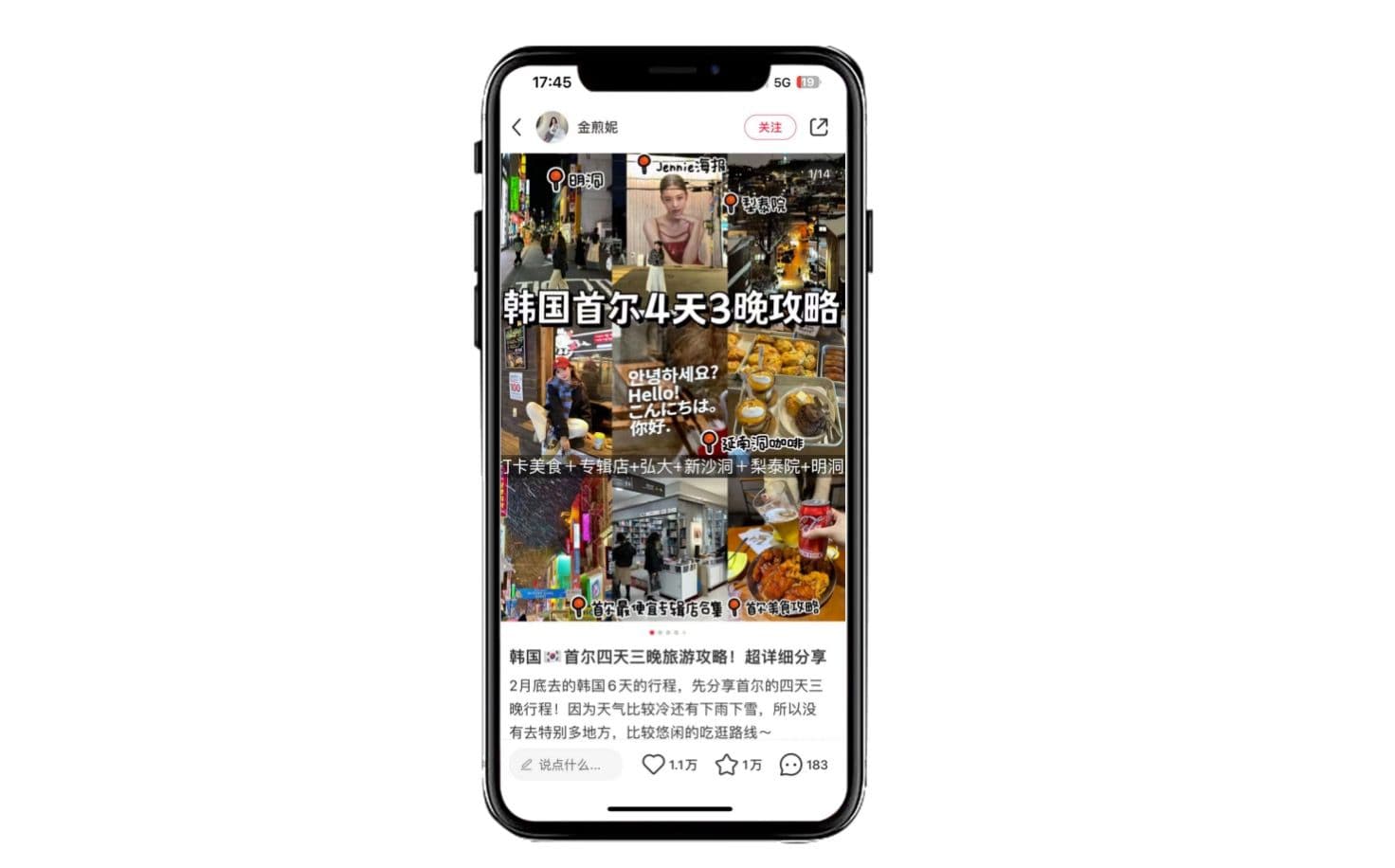
Just take a K-beauty trip as an example: it is one of the hottest “speedy travel” formats going viral in super-apps. Chinese travellers can follow a guide through a one-day beauty transformation process—including color analysis, aesthetic medical treatments, makeup, haircuts, styling, and photo shoots.
Data source: Xiaohongshu (金煎妮).
Overall marketing strategy: content-driven and precision targeting
In the increasingly competitive tourism industry, how brands effectively reach and convert users throughout their travel journey is crucial.
A) Pre-trip Chinese travellers
1. Utilize social media platforms like Xiaohongshu (Red Note) for influencer and event marketing, converting interest to private traffic and regularly engaging potential users.
2. Attract potential travelers through personalized recommendations and custom travel audience packages—such as users who have searched related keywords within 90 days.
3. Use OTA platforms and travel marketing platforms to precisely target booked travelers, promoting brand awareness and optimizing materials to increase conversion rates.
B) In-trip Chinese travellers / in-town overseas Chinese
1. Retarget through OTA platforms, using super-apps and DSP to cover users who have clicked ads and overseas traffic.
2. Maintain interaction with users through social media and real-time communication tools, offering support and value-added services, strengthening brand–user connections, and improving user experience.
C) Post-trip Chinese travellers
1. Encourage reviews on major platforms through incentive policies, enhancing brand reputation and achieving “seeding–conversion–re-seeding.” (For more detail, see our Insights article “Your Red Note Playbook: China Marketing from 0 to 1.”)
2. Continue engagement and lead travelers into private traffic, encouraging repeat consumption and loyalty—creating higher value for users while improving efficiency.
By implementing these strategies across the travel journey, brands can better meet user needs, enhance influence, and achieve business growth. For customised strategic planning, the INFINIS team is happy to help.
Conclusion
The summer travel market is full of opportunities and challenges. Overseas brands can enhance user experience and brand value—achieving market growth and brand building through targeted marketing strategies. By deeply understanding user needs and innovating marketing methods, brands can offer richer travel experiences.